| Taxwiz Accounting and Consulting Inc. | ||||||||
|
||||||||
|
|
| ||||||||||||||||||||
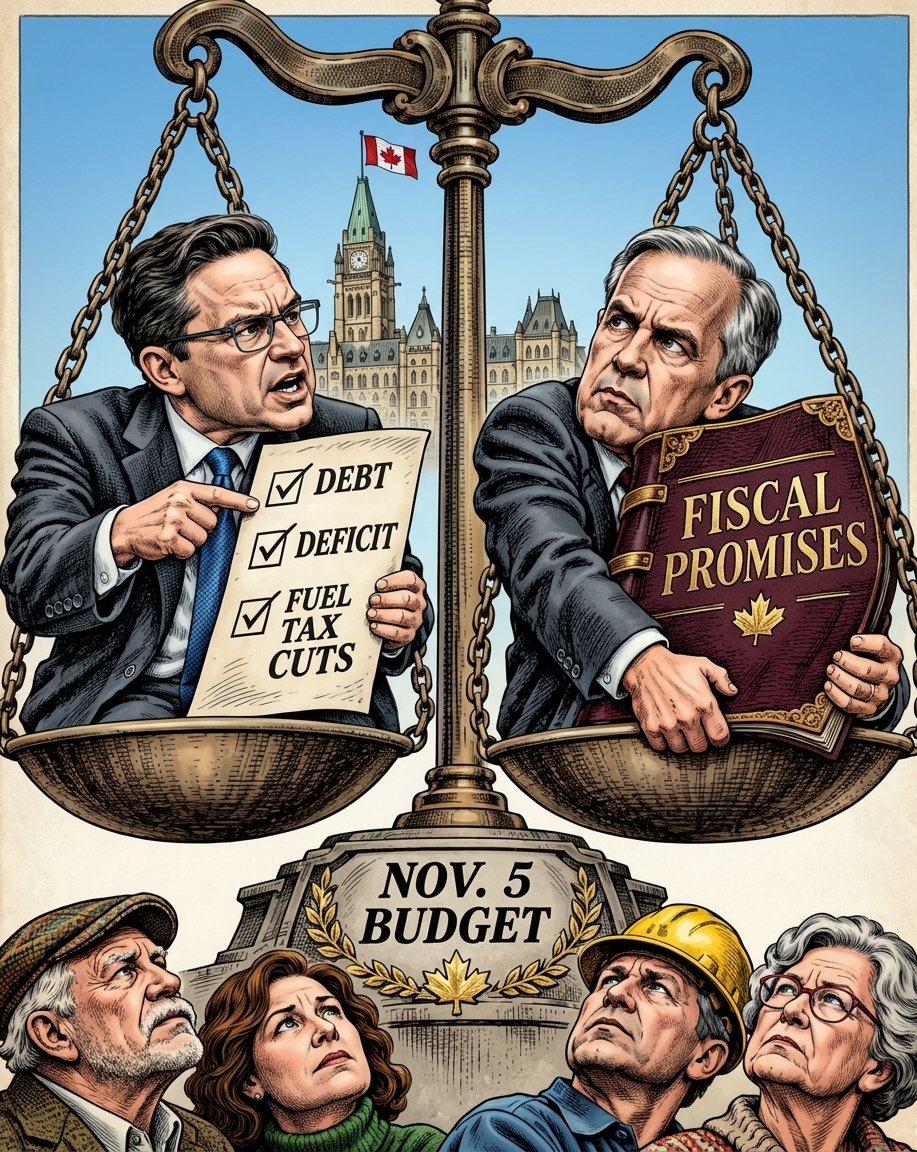
| François-Philippe Champagne, Minister of Finance and National Revenue announced the 2026 federal budget on 5 November 2026. |
|
On 5 November 2026, François-Philippe Champagne, Minister of Finance and National Revenue announced the second federal budget (hereinafter known as the Budget) of the Carney's Liberal government. While general personal and corporate tax rates remain unchanged, the Budget focused on reducing tax compliance burdens and expanding capital incentives. The following are not an exhaustive list of changes proposed by the Budget but some highlights we consider significant.
Businesses such as professional practices (accounting, legal, medical, engineering), consulting, financial services, real estate, natural resources, framing/licensing, and hospitality are excluded. Gains exempted under the Canada Growth Incentive are subject to a 30% inclusion rate for Alternative Minimum Tax purposes, matching the existing Lifetime Capital Gains Exemption (LCGE) mechanism.
Budget allows the immediate 100% write-off for Canadian Development Expenses (CDE) incurred on or after 5 November 2026. CDE are a specific category of tax-deductible costs under the Canadian Income Tax Act for the mining, oil, and gas industries. They apply to expenses incurred during the development phase of a resource property after a mineral deposit or well has been found to be commercially viable, or after a mine has entered commercial production.
Depreciable property eligible for immediate expensing would include all capital property that is subject to the CCA rules acquired on or after September 15, 2026, except buildings (and additions to buildings) included in CCA classes 1 and 3; property included in CCA classes 14 and 14.1 (e.g., franchises, licenses and goodwill), and class 51 (e.g., regulated natural gas distribution pipelines); certain vehicles in classes 10 and 10.1; and property depreciated under Schedule V and VI of the Income Tax Regulations.
Remarks
The new $15 million Capital Gains Exemption for qualifying shares of eligible Canadian corporations is an enticing incentive. However, mutual funds and ETFs comprised of qualifying shares are not eligible for the Canada Growth Incentive capital gains exemption. Investors should exercise caution and discretion when investing and claiming this exemption in due course.
The 100% write-off for Canadian Development Expenses is restrictive and only applies to certain classes of capital assets for certain industries. Taxpayers should plan their capital asset purchases carefully and write off the capital cost allowance allowed by law.
There is no explanation of why the thresholds of foreign asset reporting are selected. Be mindful that taxable income generated by foreign asssets must be included in tax returns despite whether these assets are required to be reported in T1135 or not.
It is noteworthy to remark that the Federal Government is considering adding a "successor holder" feature to RRSPs for spouses or common-law partners. Currently, a successor holder is only available for a TFSA, not RRSP. This could allow an RRSP to remain open until the death of the successor holder and avoid the value of the RRSP property being included in the income of the deceased holder. Adding successor holder to RRSPs would make this provision at par with TFSAs. The Federal Government is also considering replacing the current indirect "rollover" provisions that apply on the death of an RRSP holder with rules permitting direct tax-free transfers to qualifying registered vehicles of qualifying survivors.
The Budget proposes the additional funding to the CRA to investigate tax evasion and work with law enforcement authorities to combat money laundering ($182.4 million over four years) and to expand compliance activities related to individuals and businesses that do not file income tax returns ($116.5 million over four years). The Department of Finance predicts these measures will generate approximately $1.2 billion in additional revenue over four years. Taxpayers would expect more frequent CRA inquires.
Since the Carney's Liberal Party holds a majority government in the House of Commons, the Budget is expected to become law in due course.